
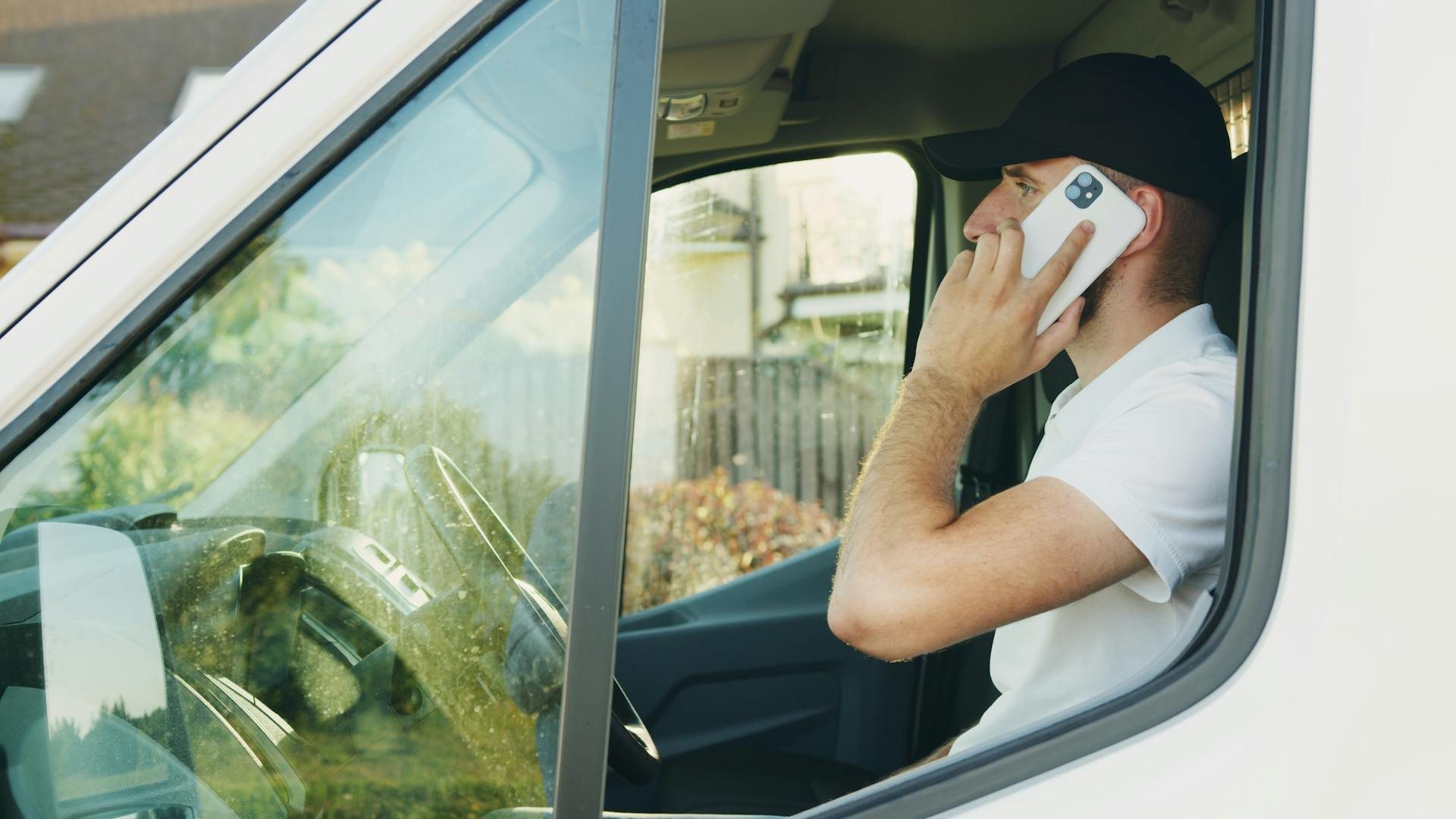
Truckers communicate with brokers, dispatchers, and shippers more than any other professional driver. Pre-2020 the workflow was: pull over, dial, speak, hang up, drive on. Post-2024, push-to-talk apps and Bluetooth helped. In 2026, voice-controlled dispatch apps are quietly replacing both — for safety, speed, and profit reasons.
What "voice dispatch" actually means
It's not just dictating a text. A voice-dispatch system understands logistics commands like:
"Mark this load delivered." → updates BOL status, fires invoice trigger.
"Add detention at Walmart DC for 2 hours." → adds line to invoice, triggers shipper notification.
"Find me a load from Memphis to anywhere within 200 miles paying over $2.50 per mile." → returns ranked load board match.
"Calculate profit on this lane: Atlanta to Newark, 870 miles, $2,400 revenue." → returns AI Profit Score in 3 seconds.
The driver never takes a hand off the wheel. The phone stays in the cradle. Compliance + speed + accuracy.
The three reasons it's spreading
1. Safety + DOT compliance
FMCSA's mobile phone rule (49 CFR 392.82) and the texting-while-driving prohibition (49 CFR 392.80) make any one-handed phone use risky. A roadside inspector who sees you holding a phone — even on speaker — has cause to write you up. Voice dispatch lets you operate the entire workflow without ever picking up the device.
2. Profit per minute
Old workflow: see load → pull over → dial broker → wait on hold → discuss → hang up → review tender → drive on. Easy 15–20 minutes of downtime per call, multiple times a day. Voice dispatch with built-in profit calc collapses that to 30 seconds while still rolling.
For a long-haul running 100K mi/year, reclaiming 1 hour/day = 250 hours/year = roughly $7,500–$12,000 of recovered productive time at $30–$50/hr blended.
3. Accuracy + audit trail
Phone calls leave no trace. "He said the rate was $2,400, not $2,200" is impossible to prove. Voice dispatch logs every command, every response, every confirmation. When a broker disputes detention, you have the timestamped voice command in your audit log.
What to look for in a voice system
- Wake word that doesn't trip on radio chatter. "Hey TruckerProfit" beats generic "Hey Assistant" because it doesn't activate during music or radio.
- Offline mode. Most rural lanes have spotty 5G. The system should queue commands until back online.
- Verbal confirmation before destructive action. "Cancel load 4521 — yes or no?" prevents accidental misfires.
- Multi-language. Spanish-English bilingual is increasingly common in trucking. Solid systems handle code-switching mid-sentence.
- Logistics vocabulary. Generic Siri/Google won't understand "detention," "deadhead," "BOL," or "lumper." Industry-specific apps will.
The catch
Most voice-dispatch apps are still bundled with $40+/mo enterprise platforms (KeepTruckin, Samsara). For an independent owner-op, that's overkill. Independent-friendly apps in the $5–$15/mo range are catching up — TruckerProfit is one, with offline-capable wake word + bilingual + AI Profit Score baked in for $4.99/mo.
The bigger picture: voice in trucking isn't a gimmick. It's the same shift that earpieces brought to call centers in 2005 — once tried, the old workflow feels broken.
¿Necesitás mover carga hoy?
Cotización en 60 segundos · Same-day pickup NY/NJ/PA/CT · 98.7% on-time
Cotizá con Sultan FreightEn el corredor NJ/NY 2026, el dispatcher promedio cierra entre 4 y 7 llamadas por hora durante turnos de pico — confirmando pickups, negociando rates, actualizando ETAs, escalando issues. Cada llamada interrumpe al driver. Cada interrupción al driver es una potencial citation por hand-held device en NY o NJ. El voice dispatch hands-free no es una feature de comodidad; es la respuesta operativa a un cambio regulatorio que arrancó en 2024 y se consolidó este año.
Esta guía cubre qué es exactamente el voice dispatch en 2026, qué dejaron las regulaciones FMCSA y los DMV de NY/NJ, qué medir antes de adoptar la tecnología y cuándo el ROI cierra para una flota de un solo truck vs una de 12.
De llamadas a comandos: qué cambió en 18 meses
Hasta 2023 el flow estándar era: dispatcher llama al driver, driver detiene el truck en el shoulder, atiende, confirma. Eso generaba dos problemas medibles: tiempo perdido (4–7 minutos por interrupción × 15 llamadas por turno = casi 2 horas) y exposición a citation. NY y NJ aplican $200–$450 por uso de hand-held device while driving, y desde 2024 la citation también puede impactar el CSA score del carrier.
El voice dispatch reemplaza la llamada de voz directa por comandos de voz que pasan por el dashboard o el headset Bluetooth conectado al ELD. El dispatcher manda texto estructurado ("New load offer: Newark to Edison, $480, pickup 2 PM"), el sistema lo lee al driver, el driver responde con voice ("Accept" / "Decline" / "Negotiate $520"). Todo sin que el driver toque el teléfono.
Cómo funciona técnicamente
Tres capas trabajan juntas:
- App del dispatcher en desktop o tablet. Compone mensajes estructurados (load offer, ETA request, alert) en plantillas predefinidas. No es texto libre.
- Backend de routing. Recibe el mensaje, lo enruta al ELD del truck objetivo, lo prioriza según la regla de timing (urgent → ahora, normal → en próxima pausa).
- ELD o head unit con TTS + STT. Convierte texto a voz para el driver y voz del driver a texto para el dispatcher. La latency típica 2026 está en 800ms–1.4s — comparable a una llamada normal.

Lo que se puede hacer y lo que no
| Operación | Voice dispatch (2026) | Requiere llamada |
|---|---|---|
| Recibir load offer y aceptar/rechazar | Sí | — |
| Reportar ETA al receiver | Sí | — |
| Reportar arrival/departure timestamp | Sí (automático con geofence) | — |
| Confirmar POD / BOL | Sí (signature digital + foto) | — |
| Reportar issue mecánico | Categorización por voz | Si requiere troubleshoot real |
| Negociar rate change post-load | Marca el flag | Sí — escalation human-to-human |
| Reportar accidente | Inicia el flow de incidente | Sí — 911 + dispatcher + insurance |
El 85% del workflow rutinario de dispatch se puede hacer por voz. El 15% restante (negociaciones complejas, incidentes, conversaciones con clientes finales) sigue requiriendo llamada de voz directa.
Regulaciones FMCSA y state-level que aceleraron la adopción
FMCSA: phone use ban for CMV drivers
FMCSA prohibe desde 2012 que un driver de CMV use cualquier hand-held device while operating. La regla original solo aplicaba a texting; en 2024 se expandió a cualquier dispositivo que requiera más de un button push. Eso prohíbe efectivamente desbloquear el teléfono mientras se conduce, lo cual hace inviable la llamada normal sin earpiece Bluetooth.
NY VTL § 1225-c y NJ NJSA 39:4-97.3
NY y NJ tienen leyes state-level con multas que suben con cada citation: NY $200 primera, $450 tercera; NJ $200 primera, $400 segunda + 3 puntos en CDL. Para un driver que vive de su CDL, 3 puntos por citation evitable son demasiado.
Trasfondo: CSA scoring
Cada citation impacta el Hours of Service basic CSA score del carrier. Un score alto en HOS resulta en más inspecciones DOT, menos preferencia de shippers grandes. Carriers con flotas miran este score como métrica de salud comercial.
No es que el voice dispatch sea futurista. Es que el modelo "dispatcher llama al driver" se volvió legalmente costoso. La industria está migrando porque la math cambió, no porque la tech sea nueva.
Cuándo cierra el ROI según tamaño de operación
1 truck owner-operator
Para un solo truck el dispatcher es típicamente el propio owner-op manejando dispatch via app y phone. El voice dispatch baja costos de manera marginal — quizá 2 citation evitadas al año. El upside real es el tiempo: 90 minutos por semana de menos parar para atender llamadas son 78 horas al año.
Costo típico de la feature: $14.99–$29.99/mes incluida en el ELD subscription. ROI: positivo si hacés > 18,000 mi/año (sino el ahorro de citation/tiempo no justifica el monthly fee).
5 trucks small fleet
Aquí el ROI es claro. Un dispatcher dedicado puede manejar 5 trucks vs 3 con métodos tradicionales, porque cada interacción es 4× más rápida y no requiere atención sincronizada del driver. Eso baja headcount o expande capacity.
Costo: $25–$45/truck/mes. ROI: típico 4–7× por reducción de costo del dispatcher + tiempo de driver liberado.
12+ trucks fleet
A esa escala la voice dispatch deja de ser una feature opcional y pasa a ser infraestructura crítica. Permite que un dispatcher cubra 10–15 trucks (vs 6–8 sin voice). Las flotas que no migran pierden contra las que sí en cost-per-load porque su overhead de dispatcher es 40% más alto.
Errores comunes en la adopción
1. Implementar la tech sin actualizar SOPs
El voice dispatch sin protocolos actualizados es un downgrade. Los drivers necesitan SOPs nuevos para load offer response, ETA reporting, POD confirmation. Sin SOPs claros, el sistema se subutiliza.
2. Plantillas de mensaje mal diseñadas
Si el load offer template es "New offer from {broker}: {lane}, {rate}, {pickup_time}", el TTS lee "New offer from BROKER QUEMARGINAL underscore LLC two seven three dash nine four..." — un disaster. Las plantillas deben estar diseñadas para TTS, con punctuation correcta y nombres pronunciables.
3. No integrar con el ELD existente
Apps standalone de voice dispatch que requieren mirar otro dispositivo además del ELD generan distracción. La integración correcta usa el head unit del ELD como única interface.
4. No considerar el accent del driver
STT en 2026 sigue teniendo problemas con accents fuertes. Para flotas con drivers de habla hispana, validar que el sistema reconoce comandos en español (Aceptar/Rechazar/Negociar) ahorra retrabajos. Cargoplex tiene voice dispatch bilingual incluido en Priority.
Qué buscar al elegir vendor
- Latency < 1.5s end-to-end. Más lento que eso y el driver pierde paciencia con el sistema.
- Integración nativa con el ELD que ya usás (Motive, Samsara, Geotab, Verizon Connect). Si requiere segundo dispositivo, está mal arquitecturado.
- SDK abierto para custom integrations. Si después necesitás conectar con tu TMS, debe haber API documentada.
- Suporte para multiple languages. Al menos inglés y español si tu fleet tiene drivers de habla hispana.
- Compliance con HOS recording. El voice command debe disparar el HOS event correcto, no romper la cadena del ELD.
Lo que NO esperes del voice dispatch
No reemplaza al dispatcher humano. No resuelve negociaciones complejas. No maneja conversaciones con shippers que requieren matiz. No es "AI dispatcher" — es interface mejorada al dispatcher humano que tenés.
El voice dispatch hace que el dispatcher sea más productivo y el driver más seguro. Pero la persona del otro lado de la línea sigue siendo necesaria para los momentos que importan: cuando el receiver cierra la dock 30 minutos antes del appointment, cuando el shipper cambia el pickup en último momento, cuando el truck rompe en el shoulder de la I-95.
Voice dispatch incluido en Cargoplex Priority
Bilingual (inglés/español), latency < 1.2s, integración nativa con Motive, Samsara y Geotab. $14.99/mes el primer truck.